
When the Doing Becomes the Problem
How pressure quietly pulls leaders out of leadership and back into the work
Bruce knew the Q3 deliverable was slipping. He could feel it, not in the data yet, but in the way his mornings were filling with work that used to belong to someone else.
At first it looked like responsibility.
But something about the shift was harder to name.
He stopped scheduling his team check-ins. Not intentionally. There just wasn't time. Somewhere between fixing the client deck at midnight and jumping into the product thread he didn't need to be in, his team stopped asking him things.
They figured he was busy. He was.
But what they couldn't see, what Bruce couldn't see, was that the doing wasn't solving the problem. It was the problem.
This is a story most leaders recognize, at least in part. Maybe not the exact details. But the feeling, the slow slide from leading to doing, from clarity to noise, from presence to quiet overwhelm, that part lands.
And here's what makes it hard to catch: it doesn't look like a problem from the inside. It looks like responsibility.
When "Doing More" Is a Stress Response in Disguise
There's a version of overwork driven by ambition. That's not what we're talking about here.
What Bruce is caught in is something different, and far more common among leaders who've been around long enough to know better. It happens when pressure crosses a certain threshold. The variables multiply. The stakes rise. Clarity drops.
In those moments execution feels like the one thing you can still control. So you reach for it. You take back the deck. You jump into the thread. You handle it yourself because it's faster, more reliable, and it quiets the noise, at least temporarily.
The problem isn't the work ethic. The problem is using a coping mechanism in a leadership role. Coping mechanisms are designed to get you through the moment. They are not designed to lead a team.
What the Team Actually Experiences
From the outside Bruce's pattern doesn't look like stress. It looks like disengagement.
The 1:1s get cancelled or never rescheduled. Responses become shorter. Delegated projects, the ones he handed off weeks earlier, quietly return under his name. Because Bruce isn't visibly falling apart, nobody names it. The team simply adapts.
They stop bringing him problems. They make decisions without him because he seems busy. High performers begin to wonder whether this is still the right place for them.
The vacuum isn't dramatic. It's gradual. But it's real.
And the cost that rarely gets calculated is not just productivity. It's trust. A team that can't read its leader, can't tell whether he's available or buried, starts operating defensively. People hedge. They over-document. They avoid the honest conversations that move work forward.
That's a cultural problem. And it began with a nervous system response that never got interrupted.
The Gap Between What's Happening and What You Can See
One defining feature of reactive patterns is that they are invisible to the person running them.
This is not a character flaw. It is how the nervous system works. When you're in a state of overwhelm, even the low grade, chronic kind, your capacity for self-observation shrinks. You're not less intelligent. You're simply less available to yourself.
The parts of the brain responsible for perspective and strategic thinking begin to give way to the systems managing immediate pressure.
Which means the moment you most need your leadership capacity is often the moment it is least accessible.
Bruce isn't choosing to under-communicate. He's not deciding to take back delegated work or withdraw from his team. He's running a pattern built over time to manage stress. It worked somewhere, probably earlier in his career.
The pattern is efficient and automatic. And until someone names it, or the consequences become loud enough, it remains invisible.
Five Signs the Pattern Is Running Before You See It
The entry point for change is noticing. Not analyzing. Not explaining. Just noticing early enough that a choice remains.
Here's what to watch for:
You stop delegating work you've already handed off. Not because someone dropped the ball, but because something inside you shifted and it now feels safer to hold the work yourself.
Your communication becomes shorter and more transactional. You are still responsive technically, but the warmth and context drop out. You move into output mode rather than connection.
Your calendar becomes a to-do list. Meetings with your team get pushed aside for heads-down work. Not once. Consistently.
Decisions that normally take twenty minutes take days. Not because the problem is complex, but because you are not available to your own thinking.
You feel productive and behind at the same time. When you are doing a lot but nothing feels like it is moving, you are likely operating in the wrong layer of the problem.
None of these signals are catastrophic on their own. But when they cluster they reveal something your calendar cannot: the system is carrying more pressure than the current leadership structure can hold.
The Somatic Layer Nobody Talks About
There is a body dimension to this that most leadership development ignores.
Before Bruce goes dark, before the 1:1 gets cancelled, before the deck returns under his name, a physical signal appears.
A tightening somewhere. A shallow breath. A shift in posture that lasts half a second and barely registers.
That physical moment is the earliest signal in the sequence. It precedes the behavior by seconds or minutes.
And it is accessible, if you know where to look.
Somatic awareness in leadership does not mean yoga or breathing exercises as productivity tools. It means becoming familiar enough with your body's signals that you can catch the pattern before it unfolds.
The gap between stimulus and response is where leadership lives. Most people do not know that gap exists until they have lost it enough times to start looking for it.
What Changes When You Start Catching It Early
The shift is rarely dramatic.
It often looks like a pause. A moment of friction before the automatic response kicks in. Sometimes it sounds like saying, "Let me get back to you on that," instead of immediately taking something back.
Those small interruptions compound.
Over time the team begins to experience something different. Not in a single conversation, but in the way work moves.
Decisions begin to happen at the right level again. Communication opens. People start bringing problems to Bruce rather than around him.
The work does not slow down. It simply begins moving through the team instead of around it.
That is the shift from doing to leading. And it does not come from a better prioritization system or time management framework. It comes from seeing the pattern underneath the behavior and interrupting it before it costs something you cannot recover.
A Starting Practice
If any of this resonates, begin here.
At the end of the day ask one question:
Where did work return under my control today that could have remained with someone else?
And what was happening in me just before that moment?
Not a diagnosis. Not a fix. Just a habit of noticing.
The pattern that costs you most as a leader did not arrive overnight. It will not disappear overnight either.
But it cannot survive being seen clearly, consistently, and without judgment.
That's where the work begins.
Noam Gamady
Certified Feldenkrais Practitioner, Reiki Master, and NVC trainer with 15+ years helping executives lead from the body, not just the mind. Based in New York City.
You Might Also Like
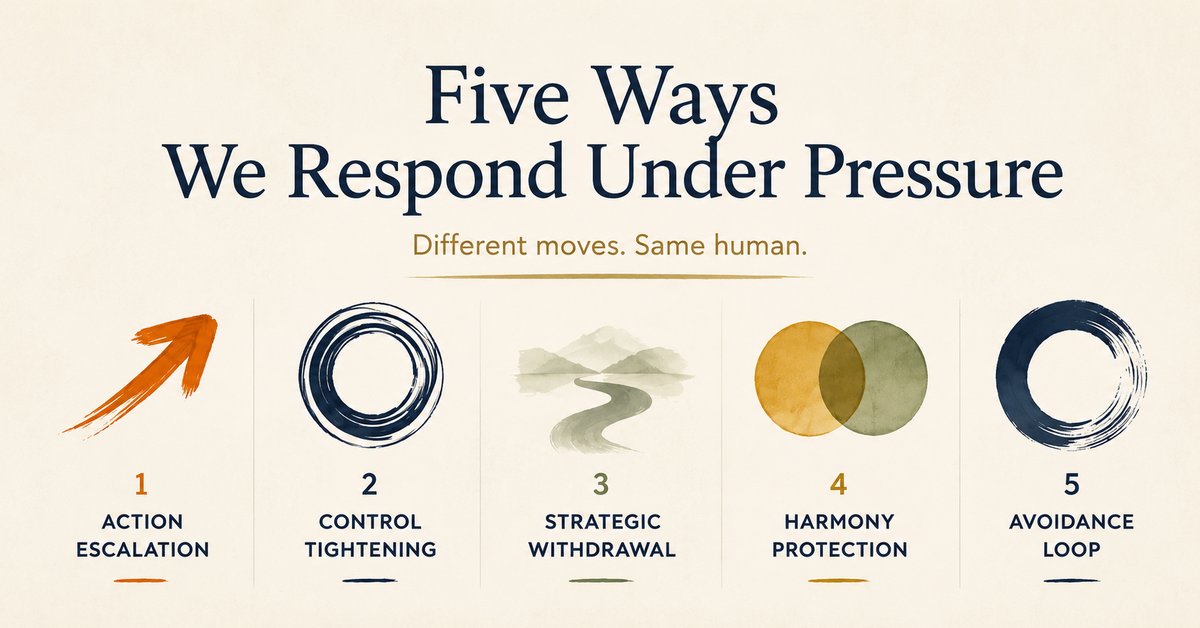
Five Ways We Respond Under Pressure
Under pressure, useful capacities can start doing too much work. Five pressure patterns describe what becomes more available — and what can become harder to reach.

Active Listening Skills: The Leadership Communication Skill That Transforms Teams
Master active listening skills to transform workplace communication and leadership effectiveness. Practical techniques and real examples from an executive communication coach.

Why Your Team Needs Psychological Safety (And How to Build It)
Google is Project Aristotle proved psychological safety is the #1 predictor of team performance. Learn how to build it in your organization.